Japanese food in Melbourne is a conversation that has been running for decades: students cooking from a Box Hill grocer, office workers booking a counter, families splitting gyoza, importers pouring regional sake at a one-night tasting. This hub is a briefing on that conversation. It is not a phone book.
How to use this page
Read it for styles, questions and verification habits. If you need a table, a booking or an allergen list, you need the venue. If you need a visa-friendly explanation of what Japanese dining is, stay here.
We do not name restaurants as currently operating. Heritage slugs that once recapped a single night — a sake dinner, a yuzu event, a Hida beef showcase — have been rewritten as produce and technique guides. The old address still works; the recap does not.
Ramen, without a leaderboard
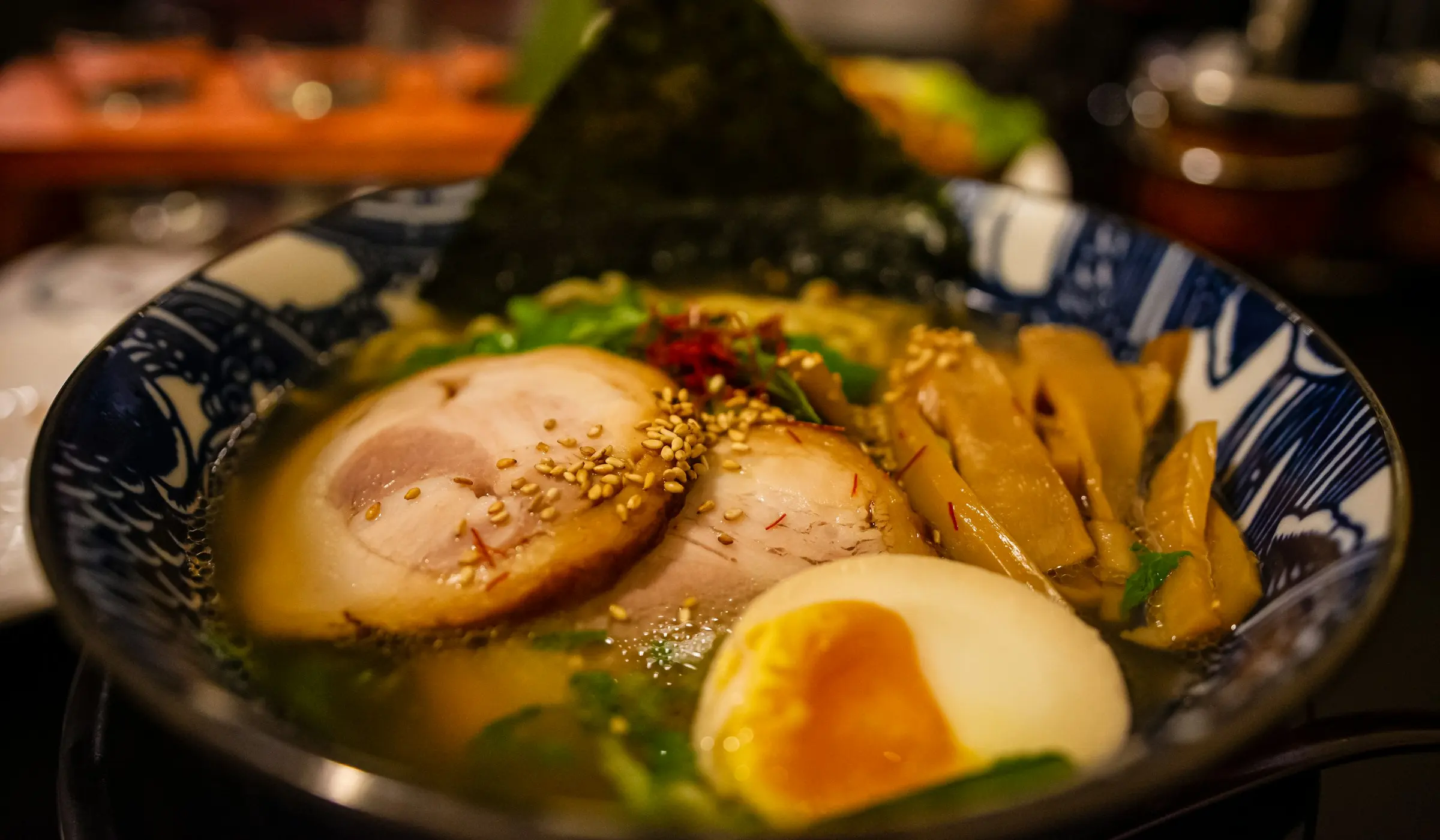
Ramen in Melbourne is usually discussed as a set of broth families: shoyu, shio, miso and tonkotsu, with regional asides (Sapporo-style miso, Hakata-style tonkotsu, kitakata-style soy). A useful visit is less about chasing a ranking and more about noticing whether the tare, fat and noodles are in balance, whether the egg is seasoned through, and whether the kitchen will talk about origin. The rewritten /ramen/ guide stays on that terrain.
Sushi and the sake pairing habit
Sushi in this city ranges from takeaway rolls to quiet counters. Pairing talk often jumps to sake because a junmai can stand next to grilled fish and a ginjo can stay out of the way of raw scallop. That is a tasting method, not a rule. /japanese-sake-sushi-degustation/ and /coffee-x-sake/ explain pairing logic and the newer coffee-and-sake experiments without inventing a degustation menu.
Izakaya, donburi and kissaten notes
Izakaya culture is the small-plate, share-and-pour evening. Donburi is the weekday bowl. Kissaten-inspired rooms treat coffee as a craft with Japanese kissaten memory (siphon, careful pour, a slice of cake) rather than as a third-wave slogan. None of those words guarantee a room still exists on a given corner. They tell you what you are looking at when a menu uses them.
Sake literacy
Sake is where guest posts and importer nights have always clustered on this domain. Start with rice polish and yeast talk only after you can name the style in the glass. /the-joys-of-sake/, /sake-with-a-smile/ and /world-sake-day/ are the rewritten literacy set. World Sake Day is a recurring international observance; any Melbourne tasting attached to it must be confirmed with the host.
Regional flavours that travel
Prefecture stories — Kyoto conveniences, Kochi yuzu, Ehime citrus, Hida beef, Okayama craft — used to arrive as one-off events. The heritage guides now explain the produce and point at official prefecture or JNTO region pages. They do not claim a 2018 pop-up is still in Prahran.
Groceries as the other kitchen
A large part of Japanese eating in Melbourne happens at home. Look for kombu, katsuobushi, soy, miso, rice vinegar, panko, ramen noodles, wagashi-adjacent sweets and tea in Asian grocery corridors. Treat a shop name you remember from 2014 as a rumour until the retailer confirms it.
Sources and limits
Culinary technique described here is general knowledge of Japanese foodways. Institutional links go to organisations that publish their own material. We invent no prices, opening hours, chef quotes or "best in Melbourne" lists. If a paragraph sounds like a review of a live room, it is a mistake — tell us.
How this hub should be used
Read the sections above as orientation, then leave the page. A good use of a Japan in Melbourne hub is to open two official tabs beside it: one government or foundation source, and one presenter or university handbook. If you cannot name those two tabs, you are not finished.
We repeat the independence line because readers still arrive from archived posts that once sounded official. japaninmelbourne.com.au is not the Consulate-General of Japan in Melbourne, not JNTO, and not The Japan Foundation, Sydney. Those organisations publish the notices that matter for visas, tourism campaigns, J-Course and the Japanese Film Festival Australia. We link them. We do not impersonate them.
Facts we will repeat, and facts we will not
We will repeat a sister-state date that two government pages agree on: Victoria and Aichi Prefecture, 2 May 1980 (Embassy sister cities, Aichi partners). We will repeat that the Japanese Film Festival Australia describes itself as beginning in 1997 (JFF about). We will not repeat attendance boasts, "best in Melbourne" lists, or a restaurant's rumoured hours.
If a guest post needs a number, the number must live on a page we can link. If it cannot, the sentence comes out. That rule is why this rebuild can sit next to a Capes-tier visitor guide without copying that guide's invented confidence.
Guest posts that belong beside this hub
Food, travel and culture essays are welcome when they add a cited angle: a prefecture produce page, a handbook subject code, a museum program, a transport operator notice. They are not welcome as advertorials, as live venue lists, or as republished interviews. Send the pitch through /contact/.
Old category URLs — gourmet, event, shop, interview, beauty — 301 toward the hub that now owns the topic. If you bookmarked a CMS address from 2012, you should land on a real article with a footer, not on a soft-404 dressed as a homepage.
Accessibility, money and the unglamorous checks
Ask operators about stairs, seating, allergens, photography rules and whether a program is bilingual. Ask airlines and issuers about fares and passes. Ask Smartraveller about advice that can change with a government notice. This site will not invent those answers to look complete.
If you are a student, the University of Melbourne Japanese Studies pages and the Monash Japanese studies handbook are the enrolment truth. If you are a traveller, Smartraveller on Japan is the advice truth. If you are a filmgoer, jffau.jpf.go.jp is the program truth.
A closing note on tone
Indigo, sakura, sumi and washi are the colours of this rebuild. The tone is calmer than a tourism reel and stricter than a listings app. We would rather send you away slightly under-informed and honest than fully entertained and wrong. That is the entire editorial personality of japaninmelbourne.com.au.
What to do after you finish this page
Choose one next action that is not "open another blog". If this hub is food, walk a grocery aisle and read a label. If it is culture, open the Japan Foundation or ACMI listing that is actually live. If it is events, find the presenter. If it is language, open a handbook. If it is shopping, confirm a retailer. If it is travel, open Smartraveller. If it is the guides index, pick one heritage slug and read it through. If it is about or contact, send a source or do not write at all.
That one action is how Japanese Melbourne stays a city rather than a mood board. The footer disclaimer will still be there when you come back.